2YO Racing And The Benefit Of Patience!
The Benefit of Patience
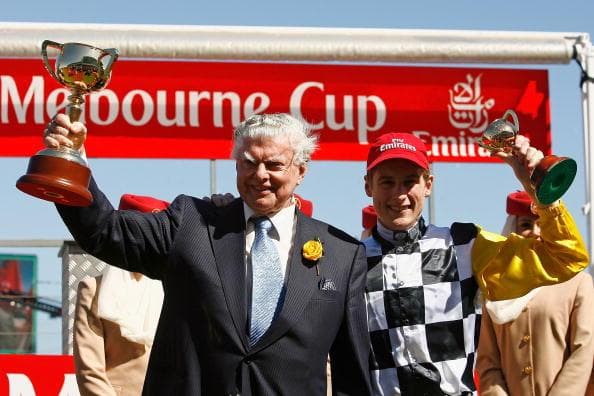
The late Bart Cummings, trainer of 246 Group 1 winners, including 12 Melbourne Cups, famously said:
“Patience is the cheapest thing in racing — and the least commonly used.”
That wisdom is not outdated. A horse’s conformation, physiology and biomechanics have not fundamentally changed.
Given the huge increase in prize money in top races for older horses, patience is a lot more rewarding now than it has ever been. Of the 100 million dollar races in Australia, only 7 are for 2-year-olds. Considering the gross majority of Golden Slipper and Blue Diamond winners do not repeat their Group 1 form as three-year-olds it makes little sense to make these races our ultimate goal.
The evidence in front of us is overwhelming.
Modern Champions: Unraced at Two
Looking at Australia’s elite horses of the past two seasons and beyond, there is clear dominance from horses that were unraced at two.
Australia's recent "champions" all unraced at 2yo
Pride Of Jenni - 12 wins - 4 Gr.1 wins - $11.4M earnings
Autumn Glow - 11 wins - 3 Gr.1 wins - $9.1M earnings
Sir Delius - 6 wins - 2 Gr.1 wins - $1.5M earnings
Via Sistina - 16 wins - 11 Gr.1 wins - $19M earnings
Mr Brightside - 20 wins - 10 Gr.1 wins - $18.8M earnings
Half Yours - 8 wins - 2 Gr.1 wins - $9.2M earnings
Without A Fight - 11 wins - 2 Gr.1 wins - $9.7M earnings
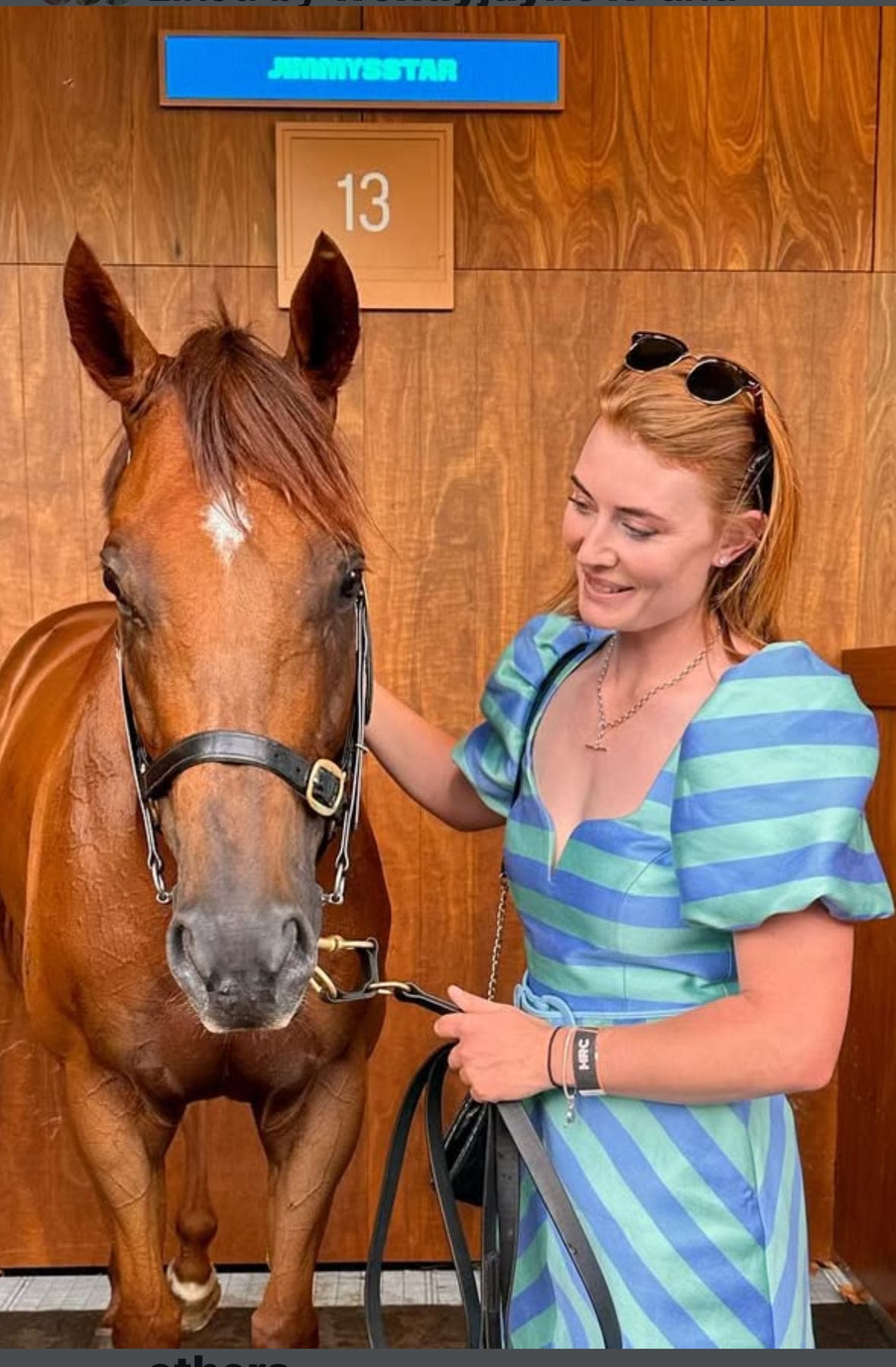
Jimmysstar - 11 wins - 3 Gr.1 wins - $6.6M earnings
Private Harry - 5 wins - 1 Gr.1 win - $2M earnings
Gringotts - 12 wins - 1 Gr.1 win - $6M earnings
Aeliana - 4 wins - 1 Gr.1 win - $2.7M earnings
Kovalica - 7 wins - 1 Gr.1 win - $4.3M earnings
Ceolwulf - 7 wins - 4 Gr.1 wins - $10.9M earnings
War Machine - 7 wins - 1 Gr.1 win - $3.3M earnings
Baraqiel - 8 wins - 1 Gr.1 win - $1.4M earnings
Antino - 13 wins - 2 Gr.1 wins - $3.3M earnings
Nature Strip - 22 wins - 9 Gr.1 wins - $20M earnings
Incentivise - 9 wins - 3 Gr.1 wins - $5.7M earnings
Kolding - 11 wins - 2 Gr.1 wins - $6.6M earnings
Atishu - 11 wins - 3 Gr.1 wins - $5.9M earnings
Egg Tart - 7 wins - 2 Gr.1 wins - $1.3M earnings
Espiona - 7 wins - 1 Gr.1 win - $3.3M earnings
Royal Descent - 5 wins- 1 Gr.1 win - $2.7M earnings
The same theory can be applied to horses all around the world.
Hong Kong's recent "champions" all unraced at 2yo
Romantic Warrior - 21 wins - 12 Gr.1 wins -$42M earnings
Ka Ying Rising - 18 wins - 7 Gr.1 wins - $26M earnings
Beauty Generation - 20 wins - 8 Gr.1 wins - $19M earnings
Golden Sixty - 26 wins - 10 Gr.1 wins - HK$167M earnings
Voyage Bubble - 12 wins - 6 Gr.1 wins HK$130M earnings
California Spangle - 13 wins - 3 Gr.1 wins - HK$84M earnings
Lucky Sweynesse - 16 wins - 4 Gr.1 wins - HK$80M earnings
Exultant - 13 wins - 5 Gr.1 wins - HK$88M earnings
New Zealand's recent "champions" all unraced at 2yo
Well Written - 5 starts 5 wins - 1 Gr.1 win - $1.4M earnings
Grail Seeker - 4 wins - 2 Gr.1 wins - $788K earnings
Willydoit - 4 wins - 1 Gr.1 win - $970k earnings
Here To Shock - 14 wins - 1 Gr.1 win - $3M earnings
Provence - 7 wins - 3 Gr.1 wins - $1M earnings
Snazzytavi - 9 wins - 2 Gr.1 wins - $970K earnings
USA's recent "champions" all unraced at 2yo
Justify - 5 wins - 3 Gr.1 wins - US$3.1M earnings, sold for US$75M
Flightline - 6 wins - 4 Gr.1 wins - US$4.5M earnings
Arrogate - 7 wins - 4 Gr.1 wins - US$17.4M earnings
Curlin - 11 wins - 5 Gr.1 wins - US$10.5M earnings
Zenyatta - 19 wins - 13 Gr.1 wins - US$7.3M earnings
Invasor - 12 wins - 7 Gr.1 wins - US$7.9M earnings
Mineshaft - 9 wins - 4 Gr.1 wins - US$2.2M earnings
Wise Dan - 11 wins - 8 Gr.1 wins - US$7.6M earnings
Europe's recent "champions" all unraced at 2yo
Daryz — regarded as the best three-year-old in Europe and rated the 2nd best horse in the world. He did not debut until midway through his three-year-old season and won the Arc in his first preparation.
Ace Impact — 6 starts, 6 wins - 2 Gr.1 wins - €3.9M earnings (Champion 3YO in Europe)
The pattern is difficult to ignore.
Timing Matters
I am not opposed to two-year-old racing itself. What matters most is timing and volume.
There is a profound difference between a horse debuting in October of his 2YO year, versus May of his 2YO year. That eight-month gap represents a huge leap in physical and mental maturity — nearly 30% of a horse’s entire lifespan at that stage.
Skeletal strength, muscle mass, coordination and mental resilience improve dramatically over time. A horse in June of its two-year-old year is a fundamentally different athlete from the same horse in October of its 2-year-old year.
Champions Who Raced Lightly and Late at Two
Even among elite horses who did race at two, many debuted late in the season, often weeks after the Golden Slipper.
Many of Chris Waller’s champions follow this pattern.
Winx (first start in June)
The Autumn Sun (first start late April)
Zoustar (first start mid April)
Lady Shenandoah (first start in May)
Joliestar (first start in June)
Fangirl (one start in June at two)
Verry Elleegant (one start in June at two)
Private Life (first start in May)
Shoot Out (first start in May)
Lindermann (first start in late April)
Espiona (first start in April)
Durston (first start in October NH)
Unforgotten (first start in July)
Riff Rocket (first start in late April)
Albert The Fat (first start in July)
Land Legend (first start in November NH)
Buckaroo ( first start in July NH)
Other examples include:
Black Caviar (first start in mid-April)
So You Think (first start in May)
Dundeel ( first start in April)
Treasurethe Moment (first start in June)
Highest Earners Over The Past 6 Seasons
To further investigate this issue, we analysed the 10 highest-earning thoroughbreds in Australia from each of the past six racing seasons (2019- 2025). This produced a sample of 53 individual horses, as standout performers such as Bella Nipotina, Nature Strip, Via Sistina and Mr Brightside featured among the top 10 earners across multiple seasons.
On average, these elite horses had just 1.9 starts as two-year-olds, yet went on to average eight starts during their three-year-old season. The data reinforces a consistent theme. The industry's most successful horses were generally introduced to racing conservatively at two before enjoying more extensive campaigns at three.
Evidence with our own horses who were unraced or lightly raced at 2
ELIYASS - Triple Stakes winner/Gr.1 placed
HARLEM - Dual Group 1 winner.
SHELBY SIXTYSIX - Gr.1 winner
MR MONACO - Gr.3 winner
A LITTLE DEEP - Listed winner and Gr.3 placed
Ausbred flirt - Gr.2 and Gr.3 placed
GOOD BANTER - Gr.3 winner and placed
She’s An Artist - Stakes placed
ELAMAZ - Dual stakes winner
The Physical Reality
Appropriate training and controlled workload, as well as concussion, are essential for bone density and structural development. But it takes an exceptional individual to perform at Group level as an early two-year-old and sustain that performance through to five.
The candle rarely burns brightly from both ends.
Most good horses show their talent in their first couple of preparations. The real skill and nuance lies in knowing how to harness that talent, rather than rushing to exploit it.
The Commercial Pressure
The sales companies and the broader breeding industry have created a short cycle for horses, favouring 2yo racing in a pattern of churn, burn, and reinvest. But given horses don't fully mature until they're 3 and a 1/2 to 4YO, should we really be following this trend blindly, like a bunch of sheep?
During yearling sales season, many horses are syndicated on the promise of early two-year-old trials and races.
But history tells us something different.
In a sport where late bloomers so often outperform early 2yo, patience remains one of the greatest, and most undervalued advantages available to horsemen and owners of quality horses.
What is best for the horse is best for the owners
Having worked around the world with leading trainers for nearly eight years, I have seen first-hand the attrition that impatient training can cause. Longevity, soundness and mental well-being must always come before short-term ambition. At the end of the day, what is best for the horse is always best for the owners.
Patience costs very little.
Its rewards can be extraordinary.